
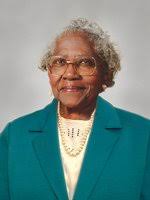

Carr was born Johnnie Rebecca Daniels on January 26, 1911, in Montgomery to John and Annie Daniels; her fathers occupation was listed in the 1920 Census as farmer. Although her father died in 1920 when she was nine, Carr had a happy childhood. Because of her mother’s determination, she obtained an education at Miss White’s Industrial School for Girls, originally known as the Montgomery Industrial School for Girls, a private school for African American girls that was founded in 1886 by Alice White and H. Margaret Beard, both white Christian reformers from the North. One of Carr’s classmates was Rosa McCauley, later known to the world as Rosa Parks. At 16, Carr married Jack Jordan, and the couple had two daughters before the marriage ended. After her divorce, Carr returned to school and took courses in nursing.

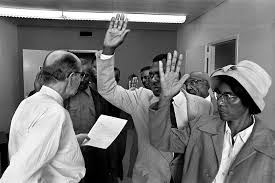
When Rosa Parks was arrested in December 1955 for refusing to give up her seat on a bus to a white man, civil rights leaders immediately began organizing a bus boycott; the Carrs were fully behind the action. On the first day of the boycott, Carr followed along behind the buses because she was eager to see if it would be a success. Both Carr and her husband were present at the mass meeting at Holt Street Baptist Church on December 5, after Parks’s arrest, when it was determined that the boycott would continue. Both Carrs participated in the boycott by transporting workers.

The Carrs took an even greater role in the civil rights movement in 1964 when they filed a suit against the Montgomery County Board of Education. They were approached by attorney Fred Gray, who had represented Rosa Parks, about suing the board on behalf of their son to desegregate the Montgomery public schools so that he could attend then all-white Sidney Lanier High School. The Carrs agreed and were initially joined by two other families in the suit, but the other families soon withdrew from the case. Although they knew the danger of becoming involved in such a lawsuit, the Carrs and their 13-year-old son continued with the case.

Carr became president of the Montgomery Improvement Association (an organization founded during the bus boycott) in 1967, remaining in the position until her death. She also was an active member of the United Way and a member of One Montgomery, an organization formed in 1984 to improve race relations in the city. In the 1970s and 1980s, Carr often lectured with activist and close friend Virginia Durr. She also wrote a memoir for young readers titled Johnnie. When Rosa Parks died in 2005, Carr delivered her eulogy. Even at the age of 97, she still maintained a busy schedule and drove her own car.
Greenhaw, Wayne. Fighting the Devil in Dixie: How Civil Rights Activists Took on the Ku Klux Klan in Alabama. Chicago: Lawrence Hill Books, 2011.
 Black Art Story